

Selection trials, run properly

Every player seen. Every score explained.

Netball Tryouts runs a selection trial end to end. Registration, check-in, a schedule that never lies, scoring that works without Wi-Fi, a decision the panel can stand behind and AI Assistant to ask questions about player performance or decisions.

It is an event operating system for selectors, not an automated selector. It improves opportunity, observation and traceability. The final judgement stays with the panel, and the record shows how they reached it.

The trial day,in the order it happens.

Seven stages. One weekend. Nothing lost between them.

1

Register

A public form that asks only what you want to ask, or import your PlayHQ list and check it before anything is saved. Two ranked positions, guardian and emergency contacts, availability, and versioned consents.

Primary positionGD
Secondary positionGK
Guardianrequired, under 18
Privacy notice v3accepted
2

Check in

Trial numbers are assigned when a player is eligible, so printed lists exist before the day. Five large buttons at the door, and an injury or a no-show flows straight into the schedule.

PresentLateNo-showInjuredWithdrawn
3

Schedule

Drills and match runs across every court, with selectors rotated so each player is seen by more than one pair of eyes. The rules of a fair trial are never broken silently. When the targets do not fit, you get warnings with fixes.

Schedule impacted Two courts can currently operate. A sixth selector would permit a third court. Regenerate future activities
4

Score

Trial number and position only. One tap per criterion, anchors on long-press, a not-observed toggle that is never a zero. Every tap is on the device before it says saved, and it reaches the panel once, and only once, when the signal returns.

Saved locally 14 players · 3 unscored
5

Review

Coverage first, then evidence. A low score and not seen enough are different facts and stay on different sides of the card. Selector disagreement is flagged, never smoothed over.

CoverageReview1 primary run, below threshold
Match tactical4.5n 9 · 4 selectors · sd 0.6
6

Decide

Build teams by drag or by tap, with a position-coverage matrix that says how many can play GK. Ask for a draft combination. Depart from the shortlist if you like, but write down why. Ratifiers approve independently.

draftpanel agreedratified 2 of 2published
7

Tell families

Templated letters for selected, reserve, callback and unsuccessful, routed to the guardian for anyone under eighteen, approved as a batch before a single one is sent. Feedback reports built from the evidence, not from memory.

Toguardian of Player 23
Templateselected · 15/U
Batchapproved · queued
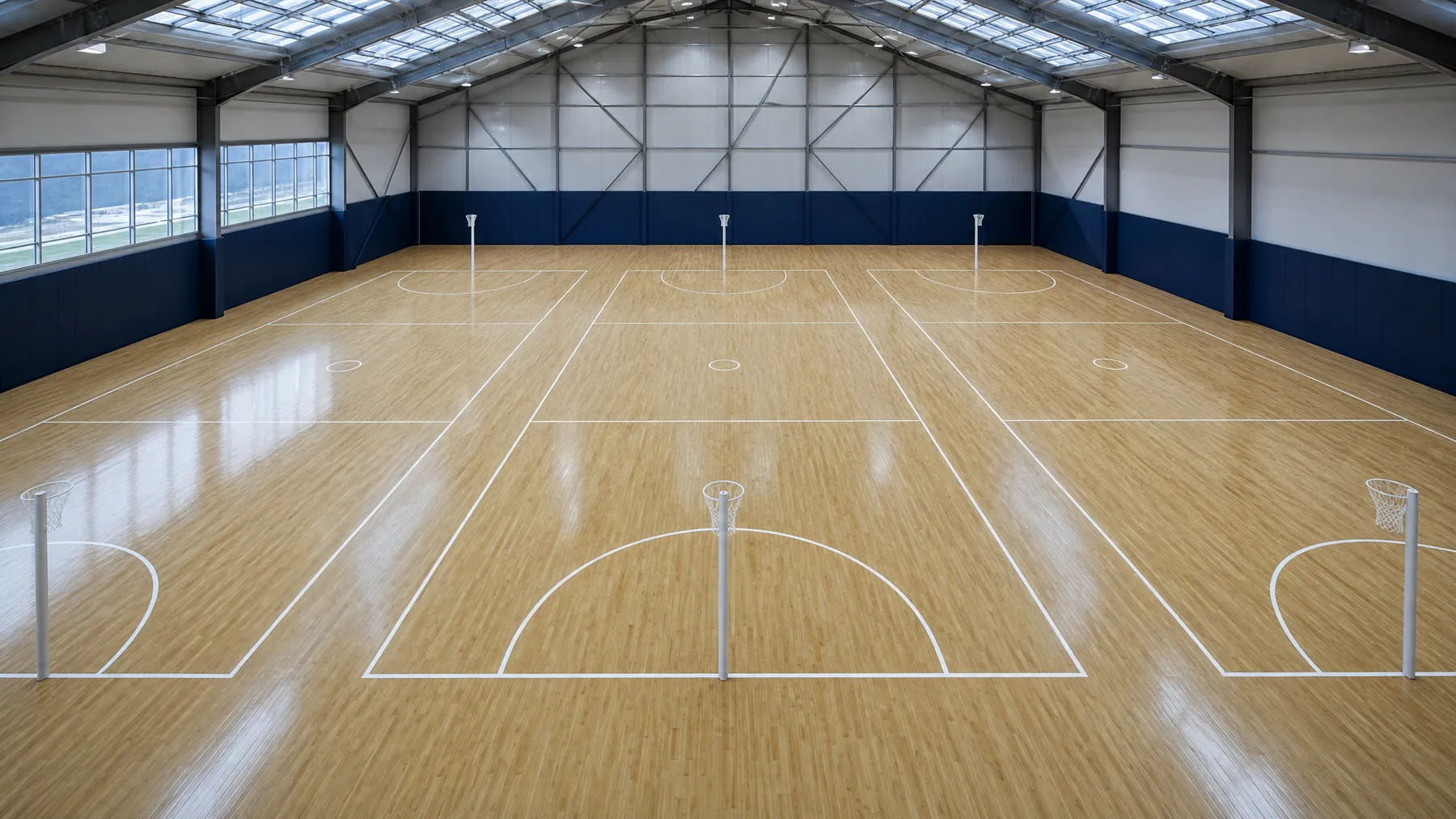
An empty indoor netball centre, three courts side by side under skylights

A schedulethat never lies.

Give it the sessions, courts, selectors, positions and who actually turned up. It builds a fair, feasible, explainable schedule, and tells you what limited it. Same players, same courts, same schedule, every time.

  • A player is in one activity per block
  • A run has exactly one player per position per side
  • Every scored court has enough selectors
  • Only checked-in, available players are scheduled
  • A selector with a declared conflict never scores that player
  • Completed and active runs are never touched by a regenerate

Six of the twelve rules it will not break. Every schedule is checked against all twelve before it is published.

A selector holding a tablet courtside
My assignmentsSaved locally
Court 2 · Run 611:20
12314807662341 55187204396214
Complete run

Score in a hallwith no Wi-Fi.

Trials often happen in venues that have no Wi-Fi or poor mobile coverage. The selector downloads the event once, then scores a whole session with the phone in airplane mode. Reload the page and the work is still there.

Nothing is doubled up. Score twenty players offline, reconnect, and there are twenty in review. Two selectors on two devices scoring the same player keep both observations. A blip in the connection is never a logout.

Coverage and performance,side by side. Never merged.

The review card puts how much we saw on one side and how well they played on the other, and refuses to combine them into a single number that would hide a player who was simply never put on court.

Coverage

Primary runs
3
Secondary runs
1
Match minutes
40
Distinct selectors
4
Criteria observed
11 of 12
Complete

Performance

Technical
4.1
Tactical
4.5
Decision-making
4.2
Position, GD
4.4
Selector spread
low
Raw basis · 1–5 anchored

Missing means missing. A criterion nobody observed is excluded from every average, never counted as zero.

Candidates · GK 41 · primary · Complete 14 · primary · Complete 23 · secondary · Complete 62 · secondary · Review
15/U Regional · draft combination
GS2GA2WA3C2WD2GD3GK1
GK: one capable. Minimum cover is two.

A draft combination.Never “the correct team”.

The team builder shows a candidate pool beside one or more rosters, with a position-coverage matrix that says plainly how many people in the squad can play each position. Ask it to suggest a combination and it reports the constraints it used.

It never applies its own suggestion. Every player you move into a team becomes a decision with a name against it.

10:42Selector Bobservation superseded, reason recorded
12:15Convenorschedule v3 published, v2 superseded
16:08ChairPlayer 62 selected, differs from shortlist, rationale attached
16:40Ratifier 115/U Regional approved
16:52Ratifier 215/U Regional approved · team ratified
permanentnothing here can be edited or deleted

The panel decides,and the record shows it.

Departing from the data-led shortlist is allowed. Doing it quietly is not. Any player picked over someone who rated above them for the same position needs a written rationale before the decision saves.

Ratification needs as many independent approvers as your policy says. Every registration, conflict, rubric change, schedule change, score edit, decision and export lands in a permanent record that nobody can rewrite.

Compare twenty-three and sixty-two at goal defence.
Player 23 has 3 GD runs, 40 match minutes and 4 selectors. Player 62 has 1 GD run, 20 minutes and 2 selectors, so 62’s evidence is thinner. On match tactical, 23 averages 4.5 and 62 averages 4.2. Player 62 is at Review because they are below the two-primary-run threshold. Sources: comparison of 23 and 62 at GD, coverage for 62, your coverage thresholds
Who is 23?
I don’t answer identity questions. Use the review screen if you’re at the reveal stage.

Ask the evidence,by voice, at the table.

The AI assistant answers questions about coverage, scores, exposure and comparisons from the evidence the person asking is already allowed to see. It reads. It never writes a score, a decision or a message.

It only ever knows Player 23 and Selector A. Names are scrubbed on the way in, checked on the way out, and every number in an answer is checked against the evidence before you see it.

Selection criteria

Judged on the rubricthey acknowledged.

Eight domains, common match-play criteria for everyone, and position-specific criteria that follow the bib. Each criterion is a 1–5 scale with written anchors, so a three means the same thing to every selector. The rubric freezes at the first score. Changing it afterwards takes a senior person, a written reason, and a record of exactly what changed.

TechnicalTacticalDecision-makingPosition-specificPhysicalTeam contributionPersonalPotential

Goal Shooter

    Anchors, 1 to 5 1Rarely, even unopposed 3Consistently under moderate pressure 5Consistently under match pressure, changes the contest

    Common, every position

    • Technical execution
    • Reading play
    • Decision-making under pressure
    • Work rate and repeat effort
    • Movement quality and agility
    • Team contribution and communication
    • Coachability and composure
    • Potential
    • Overall match impact

    Quick tags for what a number cannot hold:

    Strong decisionLate releaseFootworkHigh work rateNeeds pressure observationComposureVisionSecond effortCommunication

    Ten roles. Each seesexactly what it needs.

    A role is granted for the whole organisation or for one event, and it expires. What a role cannot reach is blocked at the source, not merely hidden from view.

    Organisation admin

    Runs the association: settings, users, capabilities, rubrics, audit. Verifies Working with Children Checks.

    Multi-factor sign-in required
    Convenor

    Runs the day: setup, registrations, schedule, check-in, communications, exports.

    May or may not vote, per policy
    Selection chair

    Leads the panel: coverage, review, compare, teams, decisions. Sees identity only at the review stage.

    Cannot verify credentials
    Selector

    Scores players on court, and nothing else. Own assignments, own observations.

    Never sees another selector’s scores during collection
    Court marshal

    Drives the run board that tells players where to go. Start, complete, delay, cancel.

    No player data beyond the number
    Check-in volunteer

    Marks arrivals and confirms trial numbers from a name-and-number view only.

    Cannot open a registration
    Medical officer

    Holds medical details and writes the one-line courtside restriction selectors are allowed to see.

    The only role that reads medical detail
    Ratifier

    Approves the final teams independently of the people who picked them.

    Reads the summary and the roster, nothing else
    Guardian

    A parent. Sees their own child’s registration, consents, outcome and feedback.

    Receives every under-18 communication
    Player

    An adult player sees their own registration and their own published outcome.

    Nobody else’s

    During scoring, a playeris a number and a bib.

    Blind mode has two stages and is built into the platform, not left to good behaviour. While scoring is open, a selector’s device holds trial numbers and positions only. There is no way for a selector to look up who a number is. Identity, club and history appear only when the phase enters review, and only to the people allowed to see them.

    Five players seen from behind, each wearing a white bib with a large trial number What a selector sees on the day: the number on the bib.
    Scoring open 23 GD Restriction: no consecutive runs
    Review stage opened by the convenor Player 23 Name, club, previous trial history, selector notes Visible to: selection chair, ratifier
    Never shown to a selector Date of birth, contacts, medical detail, other selectors’ scores
    1. While scoring is openThe selector’s device holds trial numbers, positions and any courtside restriction. Nothing else is downloaded.
    2. When review opensThe convenor opens the review stage for the phase. Identity, club and history appear for the chair and ratifiers only.
    3. Never, for a selectorContacts, dates of birth and medical detail are never in a selector’s view at any stage. Other selectors’ scores stay hidden until the reveal policy allows.

    Child safeby construction.

    Not a policy page. Rules built into the platform itself, so they hold on the busiest day.

    The compliance gate

    No adult in a position of authority reaches player data or scoring until their Working with Children Check is verified. A check that expires switches scoring off overnight. A negative notice revokes every event role at once.

    Guardian routing

    Every communication to a player under eighteen goes to the guardian first. It is built in, so no template and no convenor can route around it.

    No private messages

    There is no way for a selector to message a player or a family. Not hidden, not disabled. The feature does not exist anywhere in the product.

    Medical detail, segregated

    Only the medical officer reads a diagnosis. Selectors see a single restriction line, written for the court. Coaches never see either.

    Declared before scoring

    Selectors acknowledge the policy, confidentiality and the rubric, declare their availability and their conflicts, and are confirmed ready by the convenor before a single score can be entered.

    The AI assistant knows no names

    The AI assistant only ever sees trial numbers. It cannot reach names, contacts, registrations, medical records or messages, because it was never given a way to.

    What changeson the day.

    A spreadsheet of runs, redone at lunch when two players go homeRegenerate the rest of the day in a click. Runs already played stay exactly where they were.
    Paper score sheets, typed up on Sunday nightScored on the device, uploaded once, and added up before the panel sits.
    “I never really saw her at GK”Coverage per player, per position, per selector, before anyone compares.
    A blank criterion becomes a zero in the averageNot observed is not a score. It never drags an average down.
    The loud selector’s numbers carry the roomIndependent collection. Calibration shown per selector. Disagreement flagged.
    “Why wasn’t she picked?”A rationale on every departure, a feedback report from the evidence, an appeal window in the letter.
    0rules of a fair schedule that are never broken
    0players, 50 selectors and 12 courts in one event, proven to work
    0copy of every score, however many times the signal drops
    0ways to quietly delete a score. Corrections go on top, with a reason

    Everything in it,in one place.

    Organisation

    • Seasons and programs with age rules
    • Configurable position sets and court formats
    • Settings for the whole association, adjustable for one event
    • Features switched on and off, the sensitive ones with a written reason
    • People, roles, expiry dates, extra sign-in security

    Registration

    • Form built from your fields
    • Import from PlayHQ, with a preview and a duplicate check
    • Age eligibility evaluated automatically, exemptions with evidence
    • Position supply dashboard with the limiting position called out
    • Optional online payment and fee waivers
    • Walk-up registration at the door, if allowed

    Compliance

    • Working with Children Check register with evidence upload
    • Verified by your admin now, connected to the official checker later
    • Expired checks caught every day, automatically
    • Selector declarations and conflict register
    • Conflict handling: record, warn, block scoring, or remove from cohort

    Event setup

    • A five-step wizard from program to open registration
    • Phases: initial trial, callback, final
    • Sessions with breaks, courts with availability
    • Panel with roles, labels and votes
    • Capacity preview in plain English

    Check-in and run board

    • Pre-assigned trial numbers, printable lists
    • Present, late, no-show, injured, withdrawn
    • Live board per court with countdown and delay
    • Player-facing board that hides selectors and identity
    • Optimise for who is actually here

    Scheduling

    • Drills, small-sided, match runs, physical tests
    • Twelve rules never broken, fairness goals you can weight
    • Warnings that come with a fix you can apply
    • Same inputs, same schedule, checked before it is published
    • Rebuild only what has not happened yet, with every earlier version kept
    • A drill library stocked with the standard routines

    Scoring

    • Offline-first, installable app
    • Trial number and position only in blind mode
    • Anchored scales, not-observed toggles, quick tags, notes
    • Saved on the device, uploaded once
    • Edit windows, then corrections that supersede with a reason
    • Numeric physical tests

    Review

    • See how much of each player you saw before comparing anyone
    • Player review card with coverage and performance apart
    • Position comparison, two to four players side by side
    • Selector calibration panel
    • An optional view that evens out harsh and generous markers, always labelled
    • Historical evidence revealed only at review

    Teams and decisions

    • Drag or tap into rosters
    • Position-coverage matrix and warnings
    • Draft combination on request
    • Rationale required on departures
    • Consensus or majority with a tie-break role
    • Independent ratification, then publication

    Communications

    • Templates for selected, reserve, callback, unsuccessful
    • Guardian routing for under-18s
    • Batch approval, delivery tracking
    • Structured feedback reports as PDF
    • Appeal window in every letter

    Audit and exports

    • A permanent record showing before and after
    • Registrations, attendance, schedules, run sheets
    • Raw observations, summaries, comparison report
    • Decision and audit package in a single download
    • Post-event operational report

    AI assistant

    • Voice or text, at the review table
    • Reads only, and only what the asker is allowed to see
    • Trial numbers only, identity questions refused
    • Every number checked against the evidence
    • Conversations kept without names, for as long as you choose
    Next step

    See a trial runon your courts.

    A forty-minute walkthrough with your convenor and your chair, using your program, your positions and your rubric. Bring the schedule that went wrong last year.